
Types / Classifications
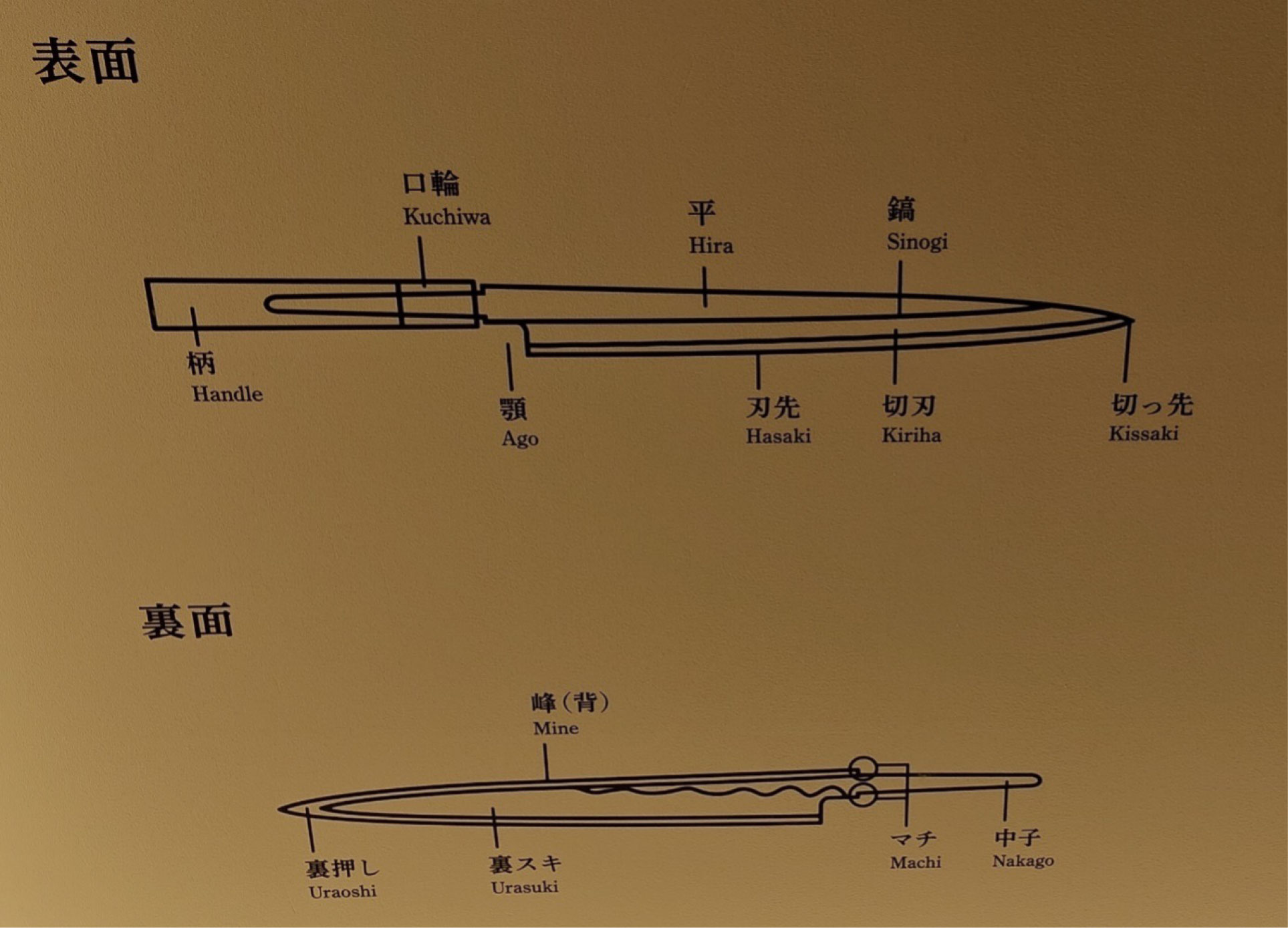
Handles
- Ebony – dense (heavy), exceptional strength and durability
- Magnolia – light but resistant, reasonably priced
- Oak – not the best, but a classic for western style handles
- Rosewood – dense, stylish, long lasting
- Ebony – exceptional strength and durability
- Resin/Epoxy – not natural but very fancy
Blades Type - Lost in Translation
- Osaka saki: Osaka-style eel filleting knife
- Kyoto saki: Kyoto-style eel filleting knife
- Nagoya saki: Nagoya-style eels filleting knife
- Edo saki: Kanto-style eel filleting knife
- Shime: Knife for dispatching fish
- Tofu kiri: knife for slicing tofu without crumbling
- Zen kiri: All-purpose knife for cutting meat and vegetables
- Kataba Petty: Knife suitable for fruits and small aliments
- Kataba Santoku: All-purpose knife for meat, fish, and vegetables
- Kataba Gyuto: All-purpose knife for meat, fish, and vegetables used by chefs
- Fuguhiki: Knife for making thin slices of pufferfish
- Chinese knife: cleaver for versatile kitchen tasks
- Nakiri: household vegetable knife
- Kenmuki: Vegetable knife for thin slicing (Katsuramuki)
- Usuba: Vegetable knife used in Eastern Japan cuisine
- Kamausuba: Vegetable knife used in Western Japan cuisine
- Hamo kiri: knife for cutting small bones in hamo
- Sushi kiri: knife for cutting sushi rolls
- Sakimaru Sashimi: sashimi knife with Japanese sword-like shape
- Kiritsuke Sashimi: Sashimi knife with kirituke tip (to slip open)
- Takohiki: Rectangular Kanto-style Sashimi knife
- Maguro knife: knife for cutting tuna
- Double-Handle Mochi kiri: for cutting mochi (rice cake) neatly
- Aji Kiri: for slicing small fish beautifully
- Kai Saki: for preparing shellfish and small fish
- Deba: Thick knife suitable for filleting fish
- Miorishi: All-purpose fish knife for filleting and portioning
Blades Finish
- Black finish: Black coated knife have a blackened surface, creating a unique and striking appearance. In our opinion, for exhibition only…
- Mirror finish: have a highly polished, reflective surface, giving them a luxurious look and maintain food fibers for a smoother texture.
- Matte finish: creates a fine, uneven surface that reduces glare, and provide a subtle texture
- Kazumi finish: feature a non-reflective, smooth surface, reducing glare and providing a modern, practical look.
- Honba-zuke: is a traditional Japanese sharpening technique that maximizes knife's performance, and is known for its exceptional sharpness.
- Namiukashi: shows wave-like patterns, on the border line between the steel solid part and the softer part.
Blade Material
Our preferred option…
Stainless steel knives combine modern practicality with Japanese precision. While carbon steel excels in sharpness, stainless steel offers rust resistance, long-term durability, and ease of maintenance.
Composed of iron with lower carbon and higher chromium content, these blades are built to withstand moisture while retaining a refined edge.
Those stainless steel knives are forged with the same craftsmanship and care, offering reliable performance without compromise. The hardness of the blade is very close to carbon steel knives.
Carbon Steels
Chosen by professionals and knife enthusiasts, carbon steel knives deliver unmatched sharpness and cutting performance. Their edge retention, responsiveness, and feel are unique.
However, it is very important to keep in mind that those knives….rust easily without methodic and regular care. Wipe them dry, sharpen them regularly, and they will reward your discipline with beauty, power, and connection.
"Stainless Steels" Types
Japanese kitchen knives utilize various stainless steel types, each with unique properties. Common stainless steels include VG10, known for its excellent edge retention and corrosion resistance, and AUS-series steels like AUS-8 and AUS-10, which offer good all-around performance and ease of sharpening. More advanced options like SG2 (R2) and ZDP189 provide superior edge retention and hardness but can be more challenging to sharpen.
Here's a more detailed look at some popular stainless steel types:
VG10: This is a high-carbon stainless steel widely used in Japanese knives. It offers a good balance of edge retention, corrosion resistance, and toughness, making it a popular choice for both professionals and home cooks.
AUS-8: A good all-around stainless steel, AUS-8 is known for its toughness and ease of sharpening. It's a popular option for beginners and those who prefer a lower-maintenance knife.
AUS-10: A step up from AUS-8, AUS-10 offers better edge retention and is still relatively easy to sharpen.
SG2 (R2): A powdered stainless steel, SG2 offers excellent edge retention due to its high carbon and vanadium content. It's a popular choice for those seeking a very sharp and durable blade, though it can be more challenging to sharpen.
ZDP189: This is a very hard stainless steel with exceptional edge retention and corrosion resistance. However, it's known for being brittle and difficult to sharpen.
Not to forget the Sakai's specialty Stainless Steel material GIN-SAN (Silver Steel #3), a stainless steel with similar mechanical properties to Carbon steels.
Stainless steel inherently possesses a resistance to rust compared to carbon steel thanks to extra materials in its internal composition, but it tends to be slippery on whetstones as a result. This makes sharpening stainless steel knives somewhat difficult.
However, Silver Steel #3 stands out not only for its sharpness but also for its exceptional balance between ease of sharpening and edge retention. It can be considered an exceptionally well-balanced knife steel, especially as a stainless steel.
Of course, the performance of a knife is not solely determined by the material but also by the manufacturing processes behind its creation and forging. The key characteristic of Silver Steel #3 in the world of stainless steels is that "the forging process significantly influences its performance."
In fact, with most commonly used stainless steels, while the forging process may alter the shape of the blade, it has minimal impact on its overall strength. However, in the case of Silver Steel #3, a forging process involving the use of a belt hammer is employed by knife craftsmen. This process helps break down the carbon structure within the steel into fine particles, spreading it through the entire blade.
Silver Steel #3, having a composition similar to carbon steels, such as White Steel #2, benefits greatly from this forging process. It enhances the overall strength of the blade, prolongs its sharpness, facilitates easier sharpening, and results in a blade less prone to chipping. This makes Silver Steel #3 a popular and premium blade. Also, you can still expect to see Damascus finishes on the blade as well, making a truly luxurious piece.
Carbon Steels Types
White Steel (Shirogami): Considered the purest form with minimal alloying elements, known for exceptional sharpness and ease of sharpening. However, it's prone to rusting and requires careful maintenance.
Blue Steel (Aogami): A slightly more refined carbon steel than white steel, with added elements like chromium and tungsten, enhancing edge retention and durability.
Aogami Super: A high-carbon, high-alloy steel that combines excellent sharpness, edge retention, and toughness, making it a premium choice for high-performance knives.